EduQA News
Psychology and Guidance in School Context Conference 2026
Within the scope of training psychologists in school settings, the Institute of Education, Quality and Evaluation, IP (EduQA, IP) and the Euroguidance Portugal Centre, in collaboration with the Europass National Centre, are promoting a new edition of the Workshops – Psychology and Guidance in School Contexts.
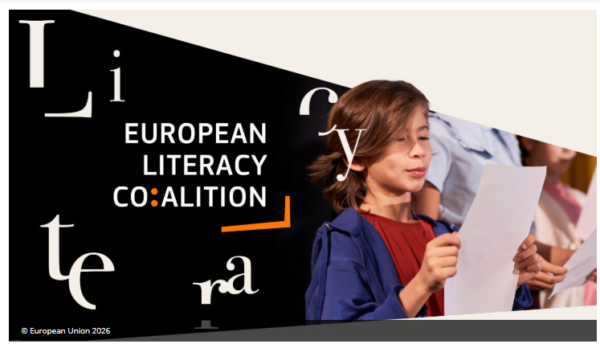
Participation of the National Reading Plan in the launch event of the European Literacy Coalition initiative.
The National Reading Plan will participate, on September 22nd and 23rd, 2026, in the official launch of the European Literacy Coalition initiative in Brussels, as a member of the European consortium EURead.
IHRA Resources for Teaching the Holocaust and the Roma Genocide
Teaching about the Holocaust and the Roma Genocide is a fundamental tool for promoting human rights, historical memory, and preventing racism, discrimination, and genocide. In this context, the International Holocaust Remembrance Alliance (IHRA) provides, on its website, a set of reference resources, also accessible in Portuguese, designed to support decision-makers, trainers, and teachers.
APLi 30th Anniversary Conference – Literacy in Portugal | Short-term training courses
The EduQA / National Reading Plan joins the celebrations of the 30th anniversary of the Portuguese Association for Literacy (APLi) with two short training sessions, on September 17th and 18th, dedicated to literacy, reading and the challenges currently facing education.
Five collections of tasks applied in pilot classes in the subjects of Mathematics A and Professional Courses, and a supporting brochure.
Five more collections of tasks applied in classes that anticipated the application of the Essential Learnings (EL) of Mathematics A and Mathematics of Professional Courses in the 2024/2025 school year are now available.
Financial Literacy Hour in Schools returns on October 2nd.
As part of World Investor Week 2026, which runs from October 1st to 9th, schools across the country are invited to participate in the "Financial Literacy Hour in Schools" initiative, which will take place on October 2nd at 11:00 AM.

The 15th edition of the "Todos Contam" contest arrives today with new features.
The 15th edition of the "Todos Contam" (Everyone Counts) competition kicks off today, an initiative promoted by the National Council of Financial Supervisors - CNSF (Bank of Portugal, Insurance Supervisory Authority and Securities Market Commission) in close partnership with the Ministry of Education, Science and Innovation, through the Institute of Education, Quality and Evaluation (EduQA).