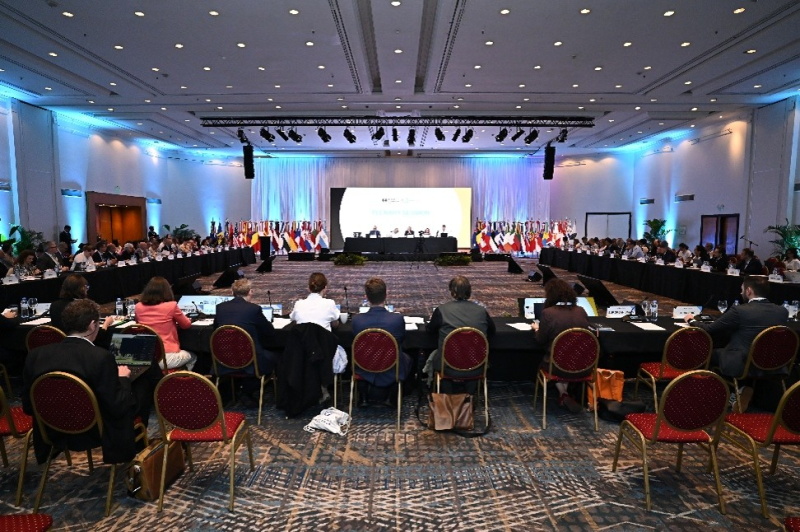
The International Holocaust Remembrance Alliance (IHRA), of which Portugal is a member country, concluded its second plenary session held under the Argentine presidency in Buenos Aires. Between November 2nd and 5th, 2026, government representatives and experts met to deepen international cooperation in the fields of education, remembrance, and Holocaust research, as well as in combating antisemitism and preserving the memory of the Roma genocide.
EduQA, which is part of the Portuguese delegation, participated in the work of the Education Working Group and the Committee on the Roma Genocide. This participation allowed them to follow and contribute to international debates on Holocaust education, the preservation of memory, and the dissemination and implementation of IHRA's pedagogical recommendations on teaching and learning about the Holocaust and the Roma Genocide.
Under the theme "Expanding the Frontiers of Memory," the Argentine Presidency of the IHRA sought to strengthen relations between the IHRA and Latin America, promote access to Holocaust-related archives, and involve a greater number of countries and institutions in the region in the preservation of historical memory.
The plenary session was preceded, on November 1st, by a conference that brought together delegations from IHRA member countries and representatives from various Latin American countries that are not IHRA members.
At the opening of the conference, the President of the IHRA, Marcelo Mindlin, stressed that the memory of the Shoah should not remain limited to its traditional geographical borders, highlighting Argentina's role as a bridge between the Alliance and Latin America. In turn, the Secretary-General of the IHRA, Michaela Küchler, warned of the speed with which falsifications and distortions of the Holocaust can spread in digital media, underlining the importance of rigorous historical knowledge and the work carried out by member countries and IHRA experts.
One of the topics addressed at the opening of the Plenary session on November 2nd was the relationship between artificial intelligence and Holocaust memory. External experts and IHRA delegates analyzed the possibilities of using artificial intelligence in education and historical archives, as well as the challenges this technology poses to museums, memorials, and educational institutions.
In the Working Groups and Committees, ways of applying the IHRA's pedagogical recommendations were also discussed. Participants also reflected on the importance of protecting historical facts for the strengthening of democratic societies.
The plenary session included presentations on two projects promoted by the Argentine Presidency: "Preservation and access to archives related to the Holocaust and the Second World War" and "Latin America and the Shoah: memory, present and future." The work developed within the framework of the IHRA Strategy for 2027-2032, whose final adoption is scheduled for early 2027, was also analyzed.
Following the Plenary session, an international meeting dedicated to the Roma genocide took place on November 6th. The initiative brought together European and Latin American perspectives and highlighted the contribution of Roma communities, educators, researchers, and public institutions to the teaching, memory, and preservation of Roma history.
The Plenary also confirmed that Austria will assume the Presidency of IHRA in 2028. Argentina will retain the Presidency of the organization until March 1, 2027, at which time France will assume those functions.
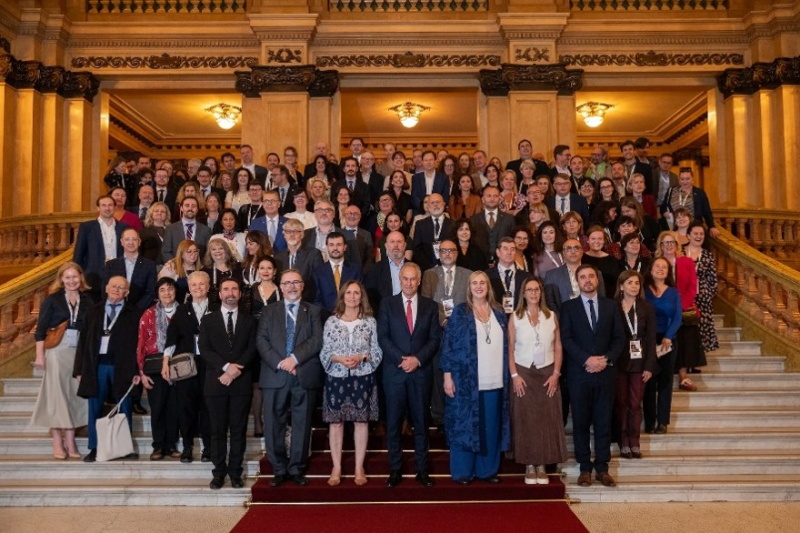
Photos: Leonardo and Nicolás Kremenchuzky
Published in November 9, 2026